
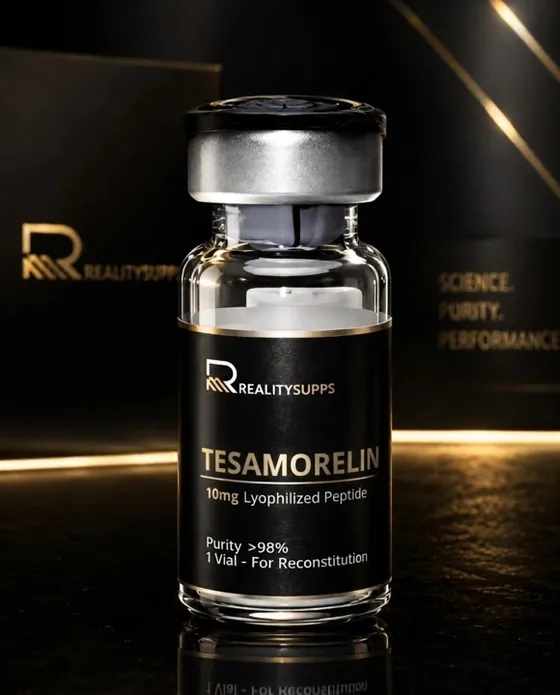
Tesamorelin
- PurityHow much of the powder is the actual compound, shown as a percent.≥98% HPLCA lab test that measures how pure a sample is., per lot
- TestingIndependent lab, every lotThe batch a vial was made in. The number is printed on the vial.
- StorageSealed, −20 °C
Ships same day before 2 PM ET · Free US shipping over $150 · Shipping & returns →
GHRH analog studied in receptor‑binding and non‑clinical pharmacology models.
What does this mean? (plain English)
This is a lab-made version of GHRH, the natural signal that tells the pituitary gland to release growth hormone, changed slightly so it lasts longer. In clinical studies of the approved drug, it raised IGF-1, a growth signal the body makes in response to growth hormone. A version is an FDA-approved prescription drug for reducing extra belly fat in adults with HIV-related fat changes (lipodystrophy). Research use only.
Every lot is independently tested. Your order's certificate comes with your lot number — look it up anytime on the Certificates page.
What it is
This is a lab-made version of GHRH, the natural signal that tells the pituitary gland to release growth hormone, changed slightly so it lasts longer. In clinical studies of the approved drug, it raised IGF-1, a growth signal the body makes in response to growth hormone. A version is an FDA-approved prescription drug for reducing extra belly fat in adults with HIV-related fat changes (lipodystrophy). Research use only.
A 44-amino-acid analog of growth-hormone-releasing hormone (GHRH) stabilized by an N-terminal trans-3-hexenoyl group, acting at the pituitary GHRH receptor to stimulate endogenous growth-hormone secretion. In a 26-week randomized phase 3 trial in adults with HIV-associated abdominal fat accumulation, it reduced CT-measured visceral adipose tissue and raised IGF-1 compared with placebo (Falutz 2007); reviews note that visceral fat returns when treatment stops (Falutz 2011). As Egrifta it was FDA-approved in 2010 to reduce excess abdominal fat in adults with HIV-associated lipodystrophy.
Evidence level
Approved drug ingredient — supplied here for research only
Regulatory note
The molecule is the active ingredient in an approved drug; this product is not a drug and is sold for laboratory research only.
Published research has examined
- GHRH‑receptor binding affinity
- Non‑clinical pharmacology (Ferdinandi 2007)
- N‑terminal trans‑3‑hexenoyl modification
Specification
| Form | LyophilizedFreeze-dried into a dry powder. powder, 3 mL glass vial, crimp cap |
| Purity | ≥98% by HPLC, per lot |
| Storage | Sealed at −20 °C, protect from light |
| Certificate | Per lot, see Certificates |
Sources
Related compounds in Receptor & endocrine pharmacology
Research topics: Hormonal and biological signaling research
Research use only. Not for human or animal consumption. Notes summarize published in‑vitro and animal research and are not claims about effects in humans or animals.