
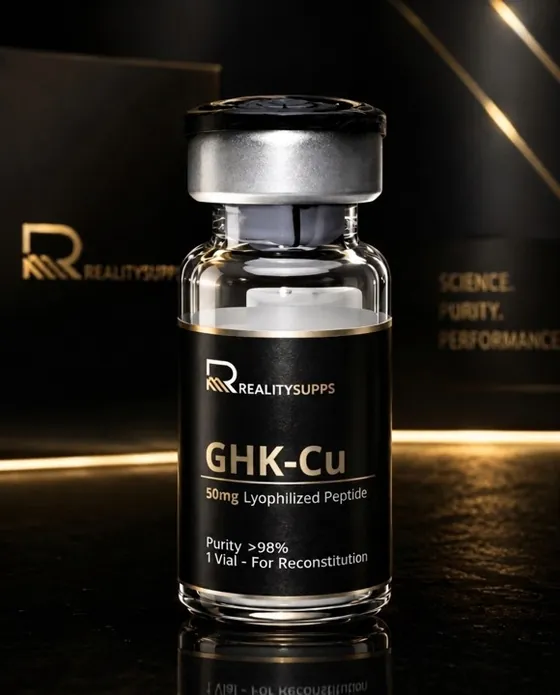
GHK‑Cu
- PurityHow much of the powder is the actual compound, shown as a percent.≥98% HPLCA lab test that measures how pure a sample is., per lot
- TestingIndependent lab, every lotThe batch a vial was made in. The number is printed on the vial.
- StorageSealed, −20 °C
Ships same day before 2 PM ET · Free US shipping over $150 · Shipping & returns →
Copper tripeptide studied in fibroblast culture for extracellular‑matrix gene expression.
What does this mean? (plain English)
This is a tiny natural peptideA short chain of amino acids, the building blocks of proteins. joined to copper, first found in human blood in 1973; its levels drop with age. In cell studies, skin cells treated with it made more collagen and elastin, the proteins that give skin its strength and stretch. In animal studies, it was linked to faster wound healing, and gene studies reported that it changes the activity of thousands of genes. Much of this research was reviewed by the lab that first discovered it. Research use only.
Every lot is independently tested. Your order's certificate comes with your lot number — look it up anytime on the Certificates page.
What it is
This is a tiny natural peptideA short chain of amino acids, the building blocks of proteins. joined to copper, first found in human blood in 1973; its levels drop with age. In cell studies, skin cells treated with it made more collagen and elastin, the proteins that give skin its strength and stretch. In animal studies, it was linked to faster wound healing, and gene studies reported that it changes the activity of thousands of genes. Much of this research was reviewed by the lab that first discovered it. Research use only.
Glycyl-L-histidyl-L-lysine complexed with copper(II), a naturally occurring tripeptide first isolated from human plasma in 1973 whose plasma levels decline with age. In fibroblast culture it was reported to stimulate collagenA protein found in skin and tendons., elastin, decorin and glycosaminoglycan synthesis and to modulate both metalloproteinases and their inhibitors; in rats, mice, pigs and dogs it was associated with accelerated wound healing. Gene-expression analyses reported that GHK up- or down-regulates at least 4,000 human genes (Pickart 2015; Pickart & Margolina 2018). Much of the review literature comes from the group that discovered the peptide.
Evidence level
Preclinical: cell-culture and animal studies; chemistry well characterized
Regulatory note
The tripeptide is also used as an ingredient in finished cosmetic products. This product is not a cosmetic or a drug and is sold for laboratory research only.
Published research has examined
- Gene‑expression profiling in human fibroblast culture
- Collagen and elastin transcript modulation in vitro
- Copper(II) binding and transport chemistry
Specification
| Form | LyophilizedFreeze-dried into a dry powder. powder, 3 mL glass vial, crimp cap |
| Purity | ≥98% by HPLC, per lot |
| Storage | Sealed at −20 °C, protect from light |
| Certificate | Per lot, see Certificates |
Sources
Related compounds in Tissue & matrix
Research topics: Skin and cosmetic research
Research use only. Not for human or animal consumption. Notes summarize published in‑vitro and animal research and are not claims about effects in humans or animals.