
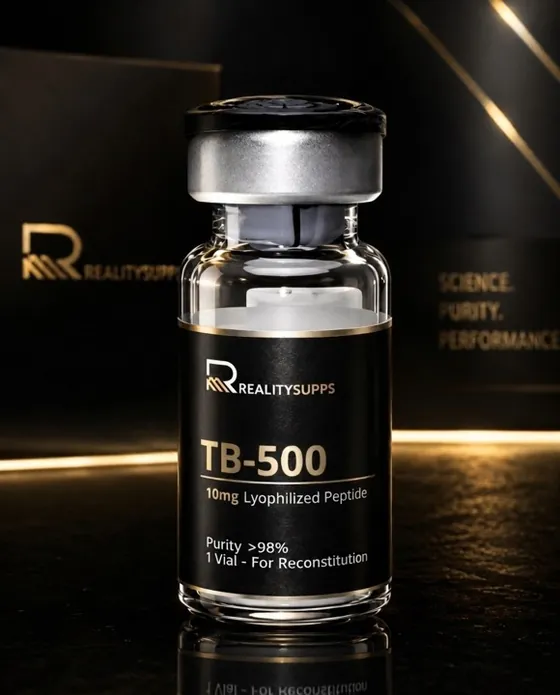
TB‑500
- PurityHow much of the powder is the actual compound, shown as a percent.≥98% HPLCA lab test that measures how pure a sample is., per lot
- TestingIndependent lab, every lotThe batch a vial was made in. The number is printed on the vial.
- StorageSealed, −20 °C
Ships same day before 2 PM ET · Free US shipping over $150 · Shipping & returns →
Fragment of the actin‑sequestering protein thymosin β4, studied in cell‑migration assays.
What does this mean? (plain English)
This is a short lab-made piece of thymosin beta-4, a natural protein that holds on to the building blocks of a cell's inner framework. In lab studies, this part of the protein was linked to faster cell movement, new blood vessel growth and wound healing. In one animal study, the short piece sped up skin-wound repair in older animals about as well as the full protein did. These results come from lab and animal work only. Research use onlyFor lab experiments only. Not for people or animals..
Every lot is independently tested. Your order's certificate comes with your lot number — look it up anytime on the Certificates page.
What it is
This is a short lab-made piece of thymosin beta-4, a natural protein that holds on to the building blocks of a cell's inner framework. In lab studies, this part of the protein was linked to faster cell movement, new blood vessel growth and wound healing. In one animal study, the short piece sped up skin-wound repair in older animals about as well as the full protein did. These results come from lab and animal work only. Research use onlyFor lab experiments only. Not for people or animals..
A synthetic peptideA short chain of amino acids, the building blocks of proteins. corresponding to the central actin-binding region (residues 17–23, LKKTETQ) of thymosin β4, the main actin-sequestering protein in most eukaryotic cells. Structure–function work maps the cell-migration, angiogenesis and wound-healing activity of thymosin β4 to this LKKTETQ-containing sequence, separate from the anti-inflammatory Ac-SDKP site at the amino terminus (Sosne 2010). In full-thickness skin wounds in aged mice, the seven-amino-acid LKKTETQ peptide promoted repair comparable to the full-length protein (Philp 2003). Published evidence for the fragment comes from cell and animal studies.
Evidence level
Preclinical: cell and animal studies of the fragment (full-length thymosin β4 has its own separate literature)
Regulatory note
Not an approved drug. Sold here for laboratory research only.
Published research has examined
- Actin sequestration and cytoskeletal dynamics in cell assays
- Cell‑migration (scratch‑wound) assays
- LKKTETQ motif as the actin‑binding domain
Specification
| Form | LyophilizedFreeze-dried into a dry powder. powder, 3 mL glass vial, crimp cap |
| Purity | ≥98% by HPLC, per lot |
| Storage | Sealed at −20 °C, protect from light |
| Certificate | Per lot, see Certificates |
Sources
Related compounds in Tissue & matrix
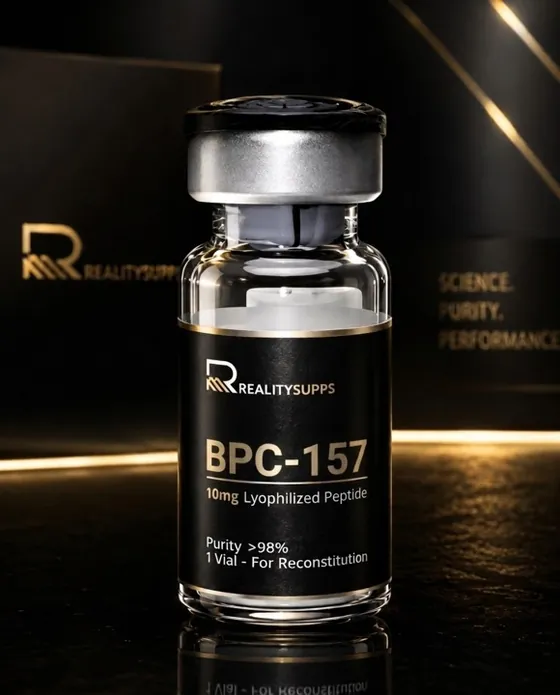
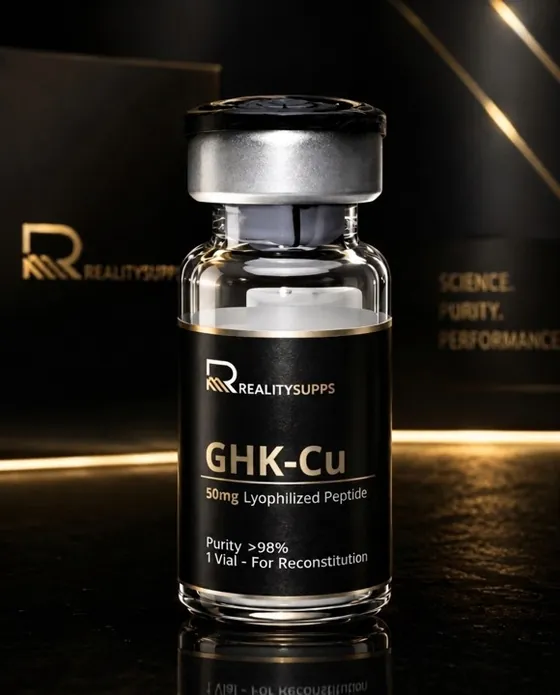
Research topics: Recovery and tissue-repair research
Research use only. Not for human or animal consumption. Notes summarize published in‑vitro and animal research and are not claims about effects in humans or animals.